


By Rorry Daniels, Farwa Aamer, and Emma Chanlett-Avery
Editor’s Introduction: Hi there. In today’s issue of Asia Policy Brief, Rorry Daniels, Managing Director of ASPI; Farwa Aamer, Director of South Asia Initiatives; and Emma Chanlett-Avery, Director of Political-Security Affairs, unpack what President Trump’s first year back in office can tell us about the direction of his Indo-Pacific strategy in 2026.
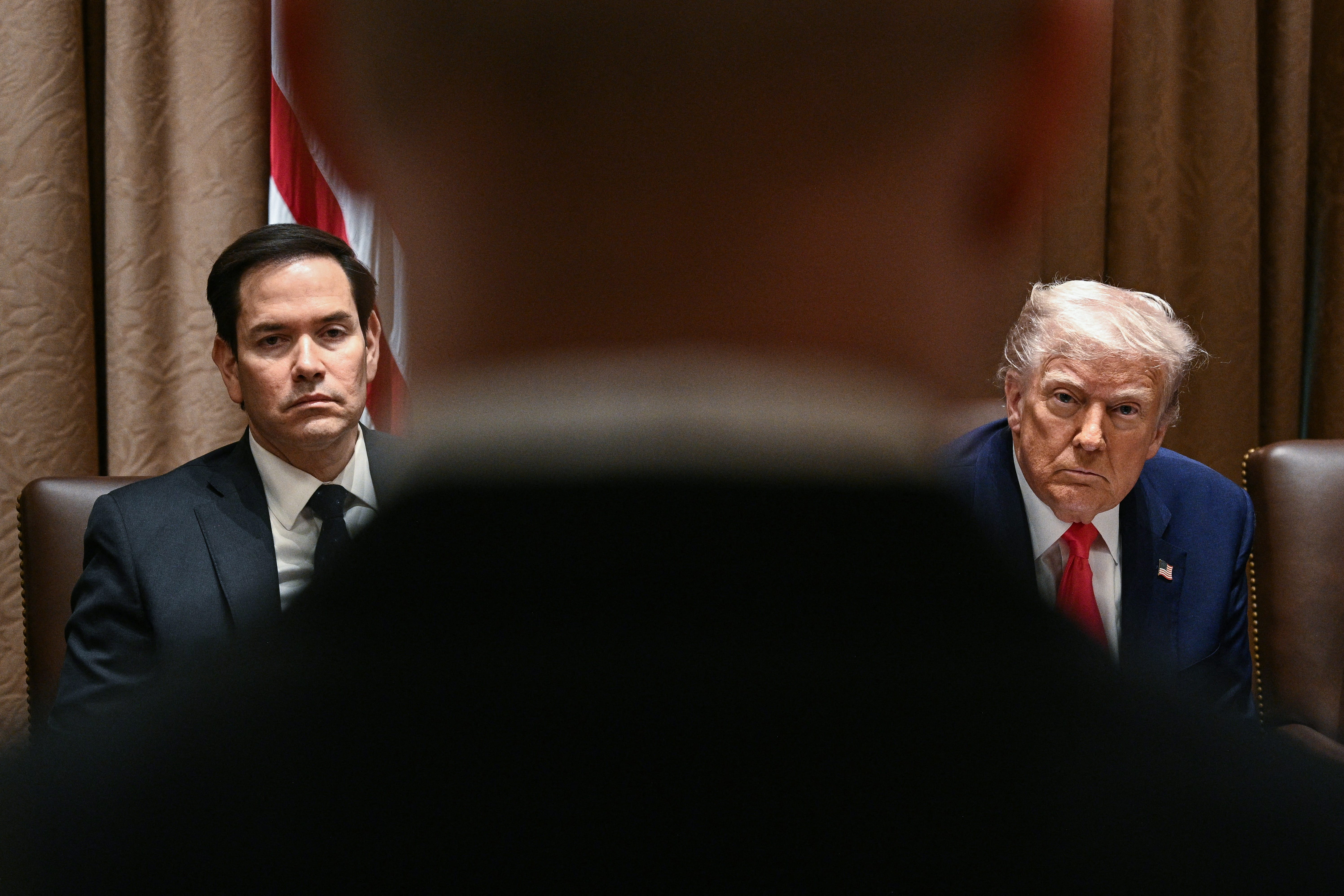
(Photo by BRENDAN SMIALOWSKI/AFP via Getty Images)
State of Affairs: A New Approach
The first year of President Trump’s second term saw global market volatility, strained ties with allies and partners, and heavy use of presidential authority. The 2025 U.S. National Security Strategy calls for a readjustment of U.S. military presence to focus on combating drug trafficking in the Western Hemisphere, while urging allies in the Indo-Pacific and Asia to increase their contributions to deterrence burden-sharing in their respective regions. The document also no longer identifies China as the U.S.’ foremost strategic competitor. Shortly after the release of the latest NSS, the White House announced the U.S.’ withdrawal from 66 international organizations.
As the first year of Trump’s second term comes to a tumultuous end with unprecedented U.S. military intervention in Venezuela and threats against Greenland, the most important question facing the United States and its global partners is not what Trump has accomplished thus far—it is whether 2026 will mark a permanent shift in the nature of U.S. strategy and leadership in its 250th year of independence. ASPI’s security and diplomacy experts focus on what Trump’s strategy in the Indo-Pacific will look like in the coming year.
What It Matters: Implications for the Indo-Pacific Region
Evolution of Great Power Competition – Rorry Daniels
The first year of the second Trump administration built on the tenets of his first term—power is fungible across the economy, military, and political sectors; is meant to be wielded by strong leaders; and ought to be aggressively used to advance the national priorities identified by the president. However, while the first Trump term was characterized by direct confrontation with the other great powers, the emerging modus operandi of the second term is to seek deals with the other major powers while pursuing U.S. power projection in situations where other big powers are unlikely to intervene.
The bombing of Iran’s nuclear sites, the targeting of ships in South America and the subsequent takeover of Venezuela, threats to Greenland’s sovereignty, and other recent maneuvers all seem to lay within the threshold of tolerance by the international community.
Meanwhile, major power diplomacy is on the rise, particularly between the U.S. and China but also with Russia, the EU, and India. Despite tariff escalation and economic security restrictions levied or threatened against each of these large powers, the Trump administration has maintained open lines of communication on their respective priorities and red lines. For example, Taiwan has not engendered special treatment despite the unique history of the unofficial relationship and escalating concerns of a hostile takeover. On the contrary, the Trump administration paused transit visits for Taiwan’s leader; concluded a trade deal with Taipei months after other important U.S. partners in Asia; and reportedly called for Japan’s Prime Minister to temper comments on Tokyo’s interests in Taiwan’s defense after taking a call with Xi Jinping. President Trump seems to be prioritizing a deal with Beijing over traditional U.S. policy interests in the cross-Taiwan Strait status quo.
While this administration has no issues confronting major powers on economic matters, it has carefully chosen its security, political and military targets to avoid direct confrontation. The rules-based order, if not over, is at least on hiatus. What remains to be seen is whether the Trump administration can continue calibrating against non-intervention in U.S. affairs when the U.S.’ own intervention is flinging farther and farther afield.
Economic Coercion and Leverage-Driven Diplomacy – Farwa Aamer
Even before President Trump returned to the White House, he signaled his ambition of ending the Russia-Ukraine war within 24 hours of taking office, casting himself as a peacemaker whose legacy would rest on resolving global conflicts and restoring America’s status as “the most powerful and most respected nation on earth.” While the Ukraine pledge remains unmet, the administration has highlighted successful U.S. mediation in eight global disputes—from India-Pakistan and Iran-Israel to the DRC-Rwanda and Thailand-Cambodia—in its 2025 NSS.
Among these, the India-Pakistan episode offers an important window into the tensions inherent in President Trump’s evolving mediation strategy. While Washington portrayed its intervention as decisive action that prevented potential nuclear escalation, India publicly dismissed this account. Meanwhile, Pakistan, keen to recast its position with Washington, embraced the narrative and even nominated President Trump for the Nobel Peace Prize. The result was a narrative gap that strained U.S.-India ties already under pressure from tariff threats and an unresolved trade deal.
But the friction has not stopped there: India has also absorbed the broader shockwaves of President Trump’s leverage-driven diplomacy. As the Trump administration poured greater political capital into the Ukraine conflict, New Delhi’s continued purchase of discounted Russian oil has drawn sharpened U.S. criticism. The imposition of additional punitive tariffs has only compounded the strain, resulting in a quick reversal for a bilateral relationship that had appeared on a high trajectory earlier in 2025. This reflects a broader paradox: President Trump’s efforts to assert U.S. influence in conflict zones risks alienating partners indispensable to Washington’s long-term Indo-Pacific strategy.
The administration’s heavy reliance on economic coercion in ending global conflicts has created a more transactional climate around conflict diplomacy. And If 2025 is any indication, U.S. mediation efforts in 2026 could lean even more on calibrated threats tied to trade, investment, and technology access.
Multilateralism Sans Washington: Middle Power Diplomacy – Emma Chanlett-Avery
The Trump administration’s contempt for global cooperation is not new, nor is its skepticism of the value of security alliances, but those instincts accelerated early in 2026. The operation in Venezuela, which put an emphatic stamp on the Trump administration’s intention to prioritize the Western Hemisphere in its foreign policy agenda, was swiftly followed by the U.S. government withdrawal from 66 international organizations. Despite a presidential tour of Asia in October that resulted in several trade and critical mineral deals, Asian allies remain unsettled as they adjust to Trump’s renewed America First approach. Japan and South Korea, particularly, have been battered by tariff negotiations and expectations that they invest billions in the United States. The public silence from the White House after Takaichi’s spoke of Japan’s obligation to come to Taiwan’s defense further reinforced the sense that U.S. alliance commitments are unreliable.
Fueled by this fear, middle powers in Asia have reached out to each other to improve their security, drive trade and economic growth, and salvage multilateral institutions that promote global norms and rules. Bilateral meetings among Japan, India, Australia, and South Korea’ leaders have flourished, as well as outreach to European countries. Security cooperation has strengthened: Japan has signed visiting forces agreements with the Philippines and acquisition pacts with India; South Korean defense and technology deals with European and ASEAN partners have expanded; and Indonesia and Australia have upgraded their economic partnership and championed ASEAN centrality. Economically, many middle powers are setting the agenda for regional trade flows through pacts such as the CPTPP and RCEP. Meanwhile, multilateral groupings like the Quad, the G7, the G20, and NATO’s Indo-Pacific 4 provide further venues for middle power cooperation even if the United States retreats.
What to Watch: Is the Shift Permanent?
The U.S.-China relationship has oscillated so wildly in 2025 that it’s difficult to assess the durability of the agreement reached in Busan, much less the long-term implications for the relationship. The second Trump administration now has a roadmap of sorts for conducting diplomacy with China, including a list of priority areas, a timeline of key deliverables, and a structure for negotiation that mirrors past practice (though with a much narrower brief). Is this a “New Type of Major Power Relations,” and if so, what type? What are both sides’ expectations on the scope of diplomacy moving forward? How will Beijing exert its influence and fill the gap as Washington retreats from multilateralism?
Will U.S. allies and other regional powers abandon the hub-and-spoke approach to Indo-Pacific security and deepen defense cooperation without U.S. facilitation? Will this cooperation provide sufficient deterrence to prevent regional powers from pursuing autonomous defenses, including nuclear breakouts?
Can peace settlements achieved through economic pressure mature into durable political agreements, or will they remain fragile ceasefires crafted to minimize friction with Washington? Whether parties move toward institutionalized conflict-management mechanisms will be a key indicator of lasting U.S. impact. Also, the administration’s fusion of conflict mediation with resource-security objectives bears close watching as it could very well define the new age of U.S. foreign policy and partnerships.
Dive Deeper with ASPI:
Join us in New York City on January 27 for an in-person program on “Unchartered Territory: The Japan-U.S. Alliance Navigates New Challenges,” featuring an expert panel discussion moderated by Emma Chanlett-Avery.
Read Lyle Morris’ recent op-ed for Channel News Asia, “China’s Foreign Policy Calculus Goes Beyond the Current White House Occupant.”
Read Farwa Aamer’s analysis of Washington’s strategic opportunity to link the Quad Critical Minerals Initiative and Pax Silica.
Listen to a recent episode of Asia Inside Out with former chief U.S. negotiator for the Paris Climate Agreement, Todd Stern, in which he unpacks the shifting geopolitics of climate diplomacy following the U.S.’ withdrawal from the Paris Accords.