


(Photo by Majid Saeedi/Getty Images)
What Happened
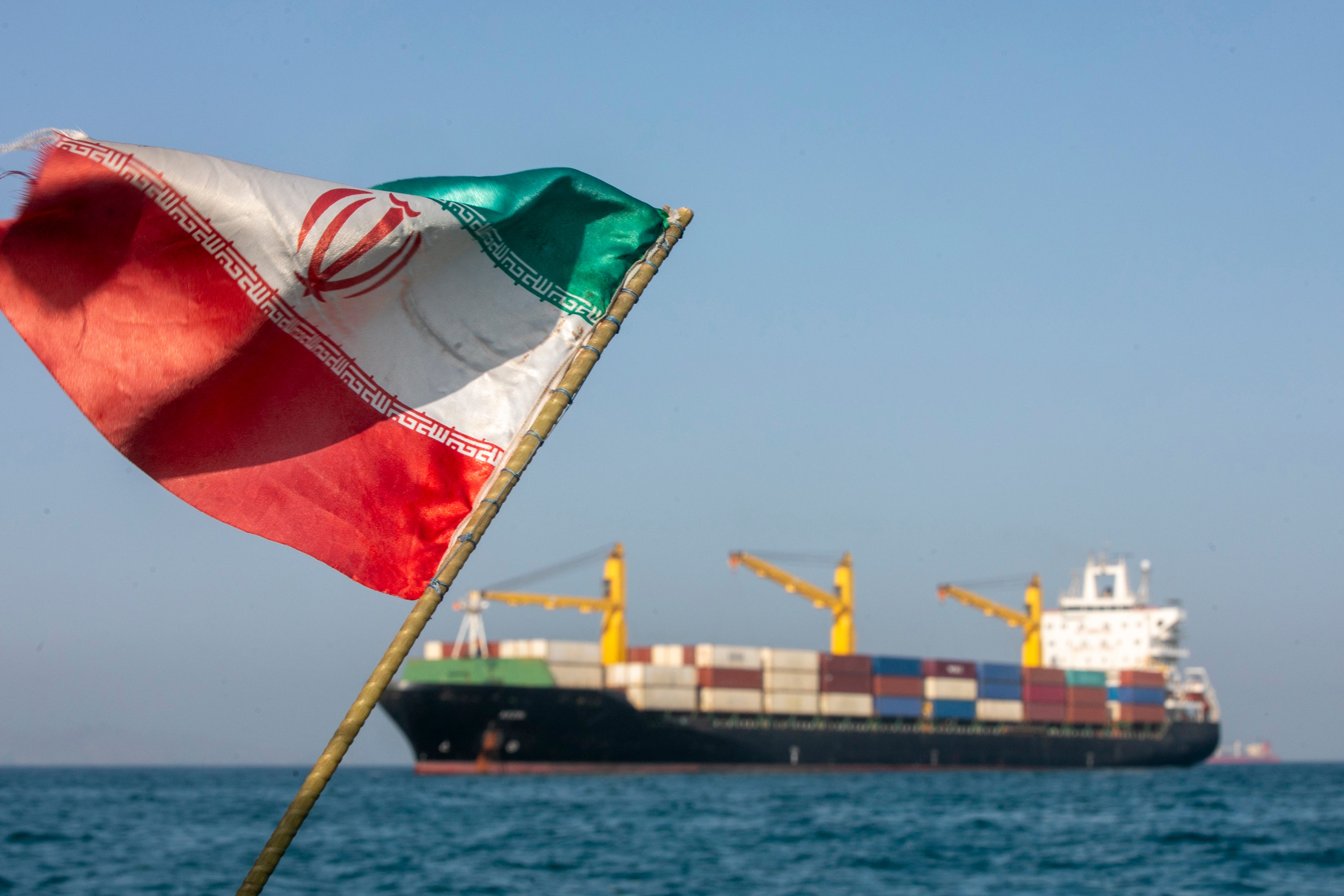
On Monday morning, an 85-word Truth Social post from U.S. President Donald Trump—in which he threatened a “whole civilization will die tonight”—set off a global guessing game about what might happen when 8 p.m. EST arrived, his latest deadline for Iran to reopen the Strait of Hormuz. At 6:32 p.m. EST, Trump posted again, this time announcing a provisional two-week ceasefire among Iran, Israel, and the United States. The ceasefire marks the first pause in 39 days of fighting across the Middle East, which began with strikes that killed Iranian Supreme Leader Ayatollah Ali Khamenei. In the weeks that followed, Iran launched waves of missile strikes against Israel, targeted America's Gulf partners, and closed the Strait of Hormuz, triggering a global oil shortage.
Asian countries, which receive roughly 80 percent of oil passing through the Strait of Hormuz, were hit particularly hard by its closure and have watched the situation closely. Pakistan ultimately emerged as a key mediator between Washington and Tehran, brokering Monday’s agreement that paused U.S. attacks on Iran in exchange for opening the Strait. In this edition of Asia ASAP, Asia Society Policy Institute experts unpack how countries across Asia are responding to the ceasefire between Iran, the U.S., and Israel—and how they are preparing for what may come next.
Pakistan as a Peacemaker
By Farwa Aamer
As Pakistan stepped in as a key intermediary between the U.S. and Iran, its role reflected a pragmatic move shaped by both opportunity and strategic necessity. Islamabad occupies a rare, sweet spot: it maintains good ties with a broad range of regional actors directly impacted by the conflict, as well as both Washington and Tehran, giving it sufficient credibility as a go-between. Its improved relationship with the U.S. over the past year, alongside close engagement with President Trump, appears to have strengthened its access in Washington and added weight to its diplomatic outreach at a critical moment.
Crucially, Islamabad’s role is also underpinned by domestic and strategic imperatives. Escalating tensions threatened energy supply routes and fuel price stability, posing economic risks. At the same time, sectarian sensitivities at home, coupled with Pakistan’s security commitments to Saudi Arabia, raised the prospect of entanglement in a broader regional conflict, one that Islamabad has strong incentives to avoid. Facilitating de-escalation, therefore, aligned directly with its national interests, while also allowing it to reassure key partners and avoid difficult strategic trade-offs.
Pakistan’s mediation efforts signal a more deliberate foreign policy aimed at establishing itself as a regional and global actor that cannot be easily sidelined. This episode marks a clear shift from the periphery toward a more confident and assertive middle-power role. Nonetheless, the overall situation and the ceasefire remain fragile, and as Islamabad prepares to host U.S.–Iran talks this Friday, all eyes are on whether this opening can be transformed into a durable, structured diplomatic process capable of producing longer-term regional solutions.
China’s Calculus
By Lyle Morris
The ceasefire in Iran, reportedly partially facilitated by Beijing, represents an opportunity for Beijing to flex its diplomatic muscle. China’s proactive role comes on the heels of Iranian Foreign Minister Abbas Araghchi’s request for China to “mediate” the escalating conflict, citing China’s successful diplomatic role in brokering an Iranian rapprochement with Saudi Arabia a few years ago. However, going forward, China is unlikely to be the main peace-broker to the conflict, as the centers of gravity reside in Washington, Jerusalem, and Tehran.
While American strikes on Iran are undoubtedly a setback for Chinese interests in the region. China has assiduously cultivated close diplomatic, economic and military relations with Tehran since Ayatollah Ali Khamenei took power in 1989. Beijing is confident that its long-term commitment to Iran will ultimately pay off, especially if the Iranian regime reconstitutes under the Ayatollah’s son, Mojtaba Khamenei, who some believe has a positive view of China.
If I’m sitting in Beijing, I’m perfectly fine to sit back and let the U.S. get bogged down in another quagmire in the Middle East and continue to let Washington exhaust its resources, munitions and energy. All it’s doing is distracting U.S. attention away from the Indo-Pacific and China, which ultimately benefits Beijing.
Asia Caught in the Cross-Fire
Asian leaders welcomed the ceasefire, but continued operations to ease the economic shocks and spiking energy prices that have rocketed their economies since the start of the war. Several stressed that, even if the conflict is resolved, the economic impact could take many more weeks or months to stabilize. Many governments have instituted emergency measures, including subsidies, cash handouts, and other price support mechanisms to cushion the blow to consumers. Many lower-income countries channeled direct subsidies in cooking fuel and diesel to the most financially vulnerable, both to ease pain and, in some cases, suppress unrest. Several Southeast Asian countries—including Vietnam, Indonesia, and Malaysia—have mandated that employees work from home more often, while Thailand’s fishing industry has docked large portions of its fleet due to rising fuel costs.
Many Asian governments have rushed to secure alternative energy supplies from exporters like Oman, Russia, and Kazakhstan. Japan and South Korea released some of their strategic petroleum reserves in coordination with the International Energy Agency to help stabilize global markets. Hours after all sides agreed to a ceasefire, Japanese Prime Minister Sanae Takaichi held a phone call with Iranian president Masoud Pezeshkian to urge de-escalation and to negotiate passage through the Straits of Hormuz for Japanese ships. Nearly all of the countries in the region anticipate hardship in financing the subsidies and building public support for the ongoing shocks to their economies.
Dive Deeper with ASPI:
Watch Farwa Aamer, Jane Mellsop, and Akshay Mathur examine how the U.S.-Israel’s airstrikes on Iran are reshaping economic outlooks, energy security, and foreign policy across South Asia.
Listen to Danny Russel and Wendy Cutler unpack how China is thinking about the U.S.-Iran.-Israel War, especially as it prepares for Trump’s visit to Beijing.
Read Farwa Aamer and Emma Chanlett-Avery’s analysis of how leading middle powers in Asia and beyond are redefining strategic autonomy, which partnerships warrant close attention, and how these evolving alignments are reshaping the global order.