


Editor’s Introduction: Hi there. In this week’s Asia Policy Brief, ASPI Delhi’s Assistant Director of Climate Nishtha Singh breaks down the tension between climate finance and ambition following the COP30 Summit in Belém and the recent catastrophe wreaked by Cyclone Ditwah on South and Southeast Asia. The urgency to adapt is rising faster than the ability of vulnerable countries to keep pace in addressing severe climate impacts.
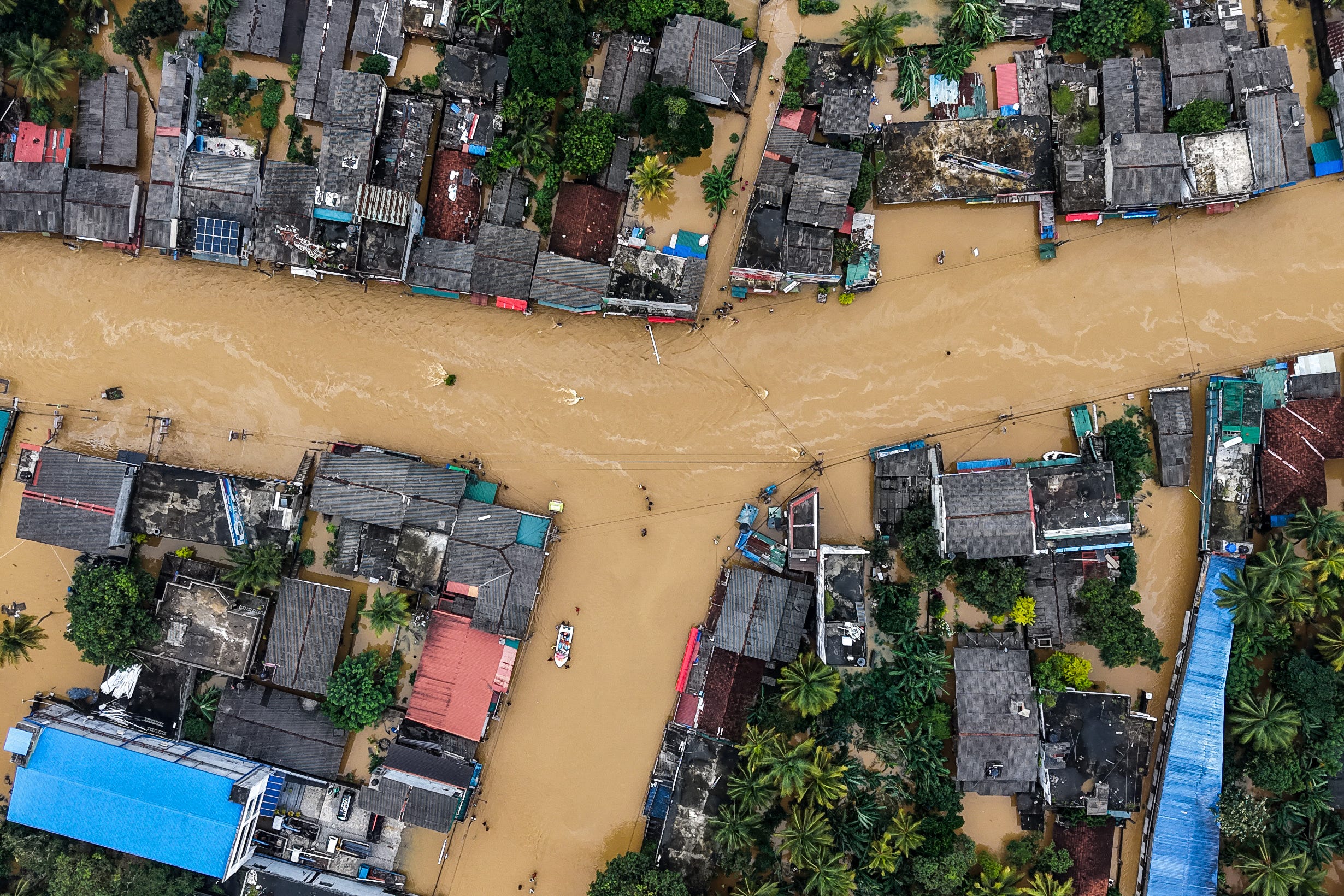
(Photo by AFP via Getty Images)
State of Affairs: Negotiations Stalled Between Ambition and Finance
COP30 witnessed a sharp political deadlock. Developing countries pushed for enhanced ambition from the Global North under Article 9.1 of the Paris Agreement, requesting developed countries to scale up their provision of climate finance. Developed countries, meanwhile, insisted on greater mitigation commitments from the Global South as part of offering additional financial pledges.
This tension stems partly from the previous year’s COP29 discussions on the New Collective Quantified Goal (NCQG), which included a headline USD 300 billion per year target for climate finance to developing countries and a broader effort to reach USD 1.3 trillion annually by 2035. The declaration sparked criticism from several developing countries, including India, which argued that the proposal failed to reflect historical responsibility and existing needs.
Then came Cyclone Ditwah, resulting in over 600 deaths and hundreds more still missing. Striking South and Southeast Asia just days after COP30 concluded, the disaster highlighted the stark mismatch between the pace of climate impacts and that of climate finance mobilization. Asia already faces some of the world’s highest climate losses, suffering USD 36 billion annually from climate and disaster events. According to the World Meteorological Organization (WMO), extreme weather has affected 50 million people in the region in 2022 alone.
The contrast between stalled climate negotiations and Ditwah’s destruction highlights a widening gap between commitment and capability. COP30’s agreement to triple adaptation finance by 2035 is a step forward, but climate impacts are intensifying now. The urgency to adapt and decarbonize is rising faster than the ability of vulnerable countries to mobilize the resources, institutions, and resilience needed to keep pace.
Why It Matters: Expensive, Loan-Heavy Climate Finance Is Deepening Debt Distress
Climate finance remains heavily loan-dependent. According to the OECD’s 2024 assessment, 69% of public climate finance from developed to developing countries is delivered as loans, while grants make up just 28%.
This model is increasingly misaligned with the needs of vulnerable economies and has contributed to a growing climate-debt trap. Countries borrow to rebuild after climate disasters, yet repeated shocks push them deeper into fiscal stress, reducing the space for long-term resilience planning.
South Asia offers clear examples:
Pakistan: After the 2022 floods affected 33 million people and caused USD 30 billion in damages, Pakistan borrowed heavily to finance reconstruction, worsening its debt-distress status.
Bangladesh: One of the world’s most climate-exposed countries, Bangladesh sees annual climate losses exceeding 1% of GDP, contributing to rising public debt.
A deeper inequity underlies this challenge: developing countries face sovereign borrowing costs up to 8 times higher than developed economies. Between 2016 and 2022, the average cost of climate-related borrowing for developing countries ranged from 3.5% to 7%, compared to near-zero rates in the EU and Japan.
Climate finance is therefore not only loan-heavy, but it is also more expensive, precisely for the countries that can least afford it. The more vulnerable a country is, the more it pays for the capital needed to recover.
The outcome is clear: loan-based climate finance risks becoming counterproductive, increasing fiscal fragility and ultimately limiting climate ambition rather than enabling it.
Domestic Climate Finance Tools Are Growing—But Disasters Derail Transition Plans
Several South Asian countries are building domestic climate-finance systems to enable climate mitigation and adaptation, including carbon markets, green bonds, and energy-transition funds. India’s recently launched Carbon Credit Trading Scheme (CCTS), and similar developments in countries such as Indonesia, Malaysia, Vietnam, etc., represent a broader regional trend toward self-generated climate finance.
Yet this progress remains fragile. Climate disasters regularly divert domestic funds away from transition investments and toward emergency response: This structural vulnerability, where every major disaster collapses fiscal space, risks derailing mitigation, competitiveness, and long-term resilience efforts across the economy.
Unilateral Trade Measures and Climate Justice
Unilateral Trade Measures (UTMs) were a key topic in Brazil’s presidency-led discussions in Belém. For developing economies already grappling with mounting climate losses and costly adaptation needs, measures such as the EU’s Carbon Border Adjustment Mechanism (CBAM) raise serious concerns about equity and climate justice.
UTMs introduce new compliance costs for exporters in countries already paying far more for climate impacts and climate finance. They also appear inconsistent with the Common But Differentiated Responsibilities (CBDR) principle, which underpins the obligation for financial and technological support from the Global North to the Global South.
Exporters in developing countries often lack the resources or access to clean technologies that firms in advanced economies possess. Cyclone Ditwah, arriving amid these debates, reinforces an essential question: Can climate-vulnerable economies fairly meet new trade-related carbon obligations while simultaneously managing escalating climate disasters with insufficient support?
Article 3.5 of the UNFCCC is clear: measures taken to combat climate change, including unilateral ones, must not constitute arbitrary or unjustifiable discrimination, or disguised restrictions on international trade.
COP30 created a pathway for addressing these tensions: three annual dialogues on trade scheduled for Bonn in 2026, 2027, and 2028. Given the accelerated pace of net-zero policy adoption, this debate is only likely to intensify.
What to Watch: Can Adaptation Finance Be Scaled Using New Instruments?
Traditional carbon markets have focused almost entirely on mitigation. But COP30 revived a key question: could market-based instruments—similar to Article 6 markets—help scale adaptation finance?
Developing countries have demanded that a minimum 50%, striving for 75%, of the USD 300 billion target be allocated to adaptation planning and implementation. Yet OECD mobilization analyses show that most private finance leveraged by development-finance institutions flows toward mitigation, not adaptation.
To close the adaptation gap, countries are exploring options such as:
Outcome-based adaptation credits, tied to measurable resilience outcomes.
Regional adaptation marketplaces, enabling countries to pool demand and create bankable project pipelines.
Resilience bonds, already used in the United States and Mexico.
Sovereign catastrophe bonds, such as the USD 225 million bond issued by the Philippines in 2019.
As climate impacts intensify, scaling adaptation finance will require shifting from ad hoc, loan-based instruments to predictable, rules-based, and innovative financing mechanisms.
Dive Deeper with ASPI
Explore one of ASPI’s featured initiatives, “Developing Emissions Trading Systems in Asia,” a comprehensive and interactive hub that offers an in-depth look at ETS developments across Asia.
Read Alistair Ritchie’s and Nishtha Singh’s paper on “Strengthening India’s Carbon Credit Trading Scheme by Inclusion of the Power Sector.”
Read an op-ed by Li Shuo on “Ten Years After Paris Agreement, Climate Action Faces a Reckoning,” featured in Channel News Asia.