


By Farwa Aamer
Editor’s Introduction: Hi there. In today’s issue of Asia Policy Brief, ASPI’s Director of South Asia Initiatives Farwa Aamer assesses what lies ahead for upcoming elections in Asia, particularly in Thailand, Japan, Bangladesh, and Nepal. Can electoral politics deliver political legitimacy and rebuild public trust in leadership?
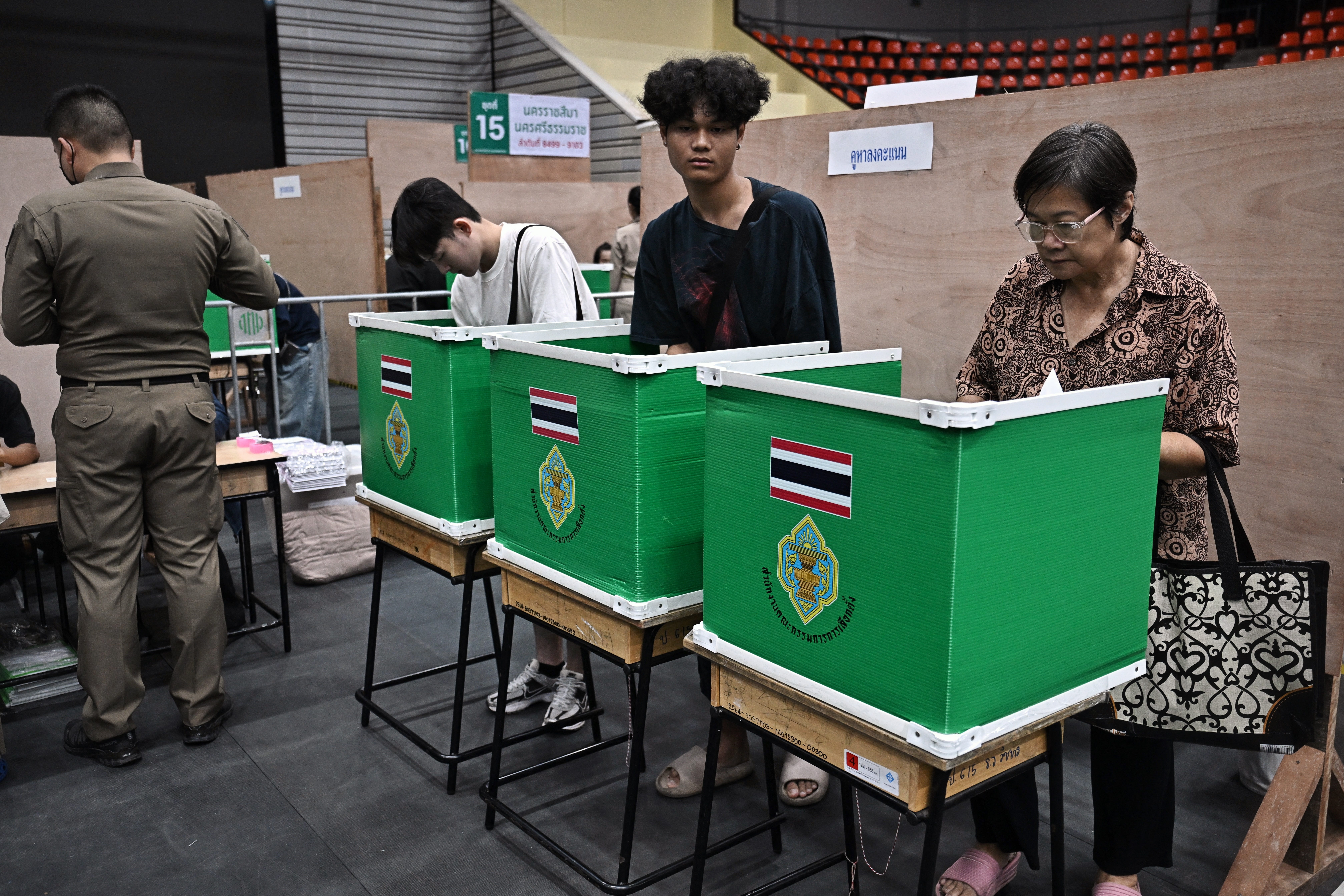
(Photo by Lillian SUWANRUMPHA / AFP via Getty Images)
State of Affairs: Bangladesh, Thailand, Nepal, and Japan head to the Polls
With the start of 2026, another election season is unfolding across Asia. Following polls held in Myanmar last month, voters in Bangladesh, Thailand, and Japan are scheduled to go to the ballot box in February, with Nepal set to follow in March.
Thailand’s February 8 election constitutes a significant test for Prime Minister Anutin Charnvirakul and his Bhumjaithai Party (BJT). The vote is closely tied to his efforts to preserve incumbency amid what appears to be a growing desire for political reform among the nation’s youth.
In Japan, Prime Minister Sanae Takaichi, riding early momentum in office, is hoping the snap election will give both her leadership and the Liberal Democratic Party (LDP) a stronger mandate.
Bangladesh’s February 12 polls will be the country’s first national election since the mass student uprising of 2024 that removed Sheikh Hasina from power.
Finally, Nepal’s March election follows a Gen Z–led movement that toppled the previous leadership, driven by frustration over rising economic inequalities and a social media ban.
Together, these elections will be a measure of whether electoral politics can still deliver legitimacy, surmount deep structural barriers, and rebuild public trust in leadership.
Why It Matters: Instability and Demands for Change
Thailand
2025 was yet another tumultuous year in Thai politics, when Anutin Charnvirakul took office after his predecessor, Paetongtarn Shinawatra, was ousted over her handling of the border war with Cambodia. An unlikely coalition between Anutin’s conservative BJT and the progressive People’s Party (PP) cleared the way for Anutin’s victory, and BJT committed to calling a general election within four months and to initiating a process to amend the constitution. However, as the PP grew frustrated by what it perceived as Anutin’s limited willingness to follow through on these commitments, it threatened to bring a no-confidence motion. In response, Anutin moved to dissolve the parliament and call the election in February, presenting the decision as an effort to “return power to the people.”
The stakes in the upcoming election are high. Voters will not only choose among political parties but will also decide in a referendum whether Thailand should adopt a new constitution, with the outcome shaping the next steps in the reform process.
Anutin enters the race with the advantages of incumbency and has benefited from heightened nationalist sentiment following the Thailand–Cambodia border conflict. However, voters may prioritize domestic needs and political change, giving the progressive PP the upper hand. The PP—which won the popular vote in 2023, yet was blocked from forming a government by the military elite—is leading in pre-election polling, setting the stage for what could be an enormous and durable shift in Thai politics.
Japan
Japan is heading into a snap election, just three months into Takaichi’s tenure, to fill all 465 seats in the House of Representatives. The race features the LDP, the Japan Innovation Party in coalition with the LDP, and the main opposition Constitutional Democratic Party now partnered with long-time LDP partner Komeito, among others. With the LDP polling relatively well, a solid victory would strengthen Takaichi’s leadership and reinforce the party’s hold on power.
Takaichi has gained support through a series of high-profile moves, including outreach to President Trump, backing a larger defense budget, and adopting a firmer nationalist stance toward China, notably in her comments on Taiwan. These positions have appealed to voters seeking a more assertive leadership style.
Still, economic concerns dominate the campaign. Rising living costs, housing affordability, and inflation weigh heavily on voters, alongside growing unease over the perceived impact of foreign residents and tourists. Younger voters have shown support for the snap election, but the outcome will ultimately test whether they and the broader electorate are ready to place their long-term confidence in Takaichi and an LDP still seen by some as a party of the old guard.
Bangladesh
The elections in Bangladesh will function as a test of whether Dhaka can restore political legitimacy and meaningfully address the demands of a new, proactive generation through democratic means. While polarization has long defined Bangladeshi politics, the current phase is marked by the prominence of a new political actor: the youth. In July 2024, the student-led protests erupted against a public sector job quota system but conveyed a much larger frustration with economic precarity, limited social mobility, and the concentration of power among entrenched political elites.
As the election approaches, voters are being asked to make two interconnected choices. Alongside selecting a new government, the country will effectively pass judgment on the July National Charter, a reform framework proposed by Dr. Muhammad Yunus’ interim government and endorsed by 25 political parties, designed to enhance constraints on executive power and improve accountability. A broad public mandate could lend momentum to reform; its rejection would leave the agenda entirely in the hands of the next government, with uncertain implications.
With the Awami League barred from contesting, the Bangladesh Nationalist Party enters the race as the most established contender. At the same time, the election is no longer structured around the historical two-party dominance. The student-led National Citizens Party is contesting the election in coalition with Jamaat-e-Islami, which leads a broader alliance including the Bangladesh Labour Party and the Liberal Democratic Party. A strong showing would mark a significant re-entry into mainstream politics after years of marginalization under Hasina’s rule. Yet the risk of renewed instability and post-election protests remain. The Awami League has warned that elections conducted without the party’s participation will face resistance.
Nepal
Years of corruption, ineffective decision-making, and entrenched elites have reinforced perceptions in Nepal that meaningful reform is difficult to achieve. Initial grievances over socio-economic inequality and shrinking opportunities for the country’s growing youth population escalated following former Prime Minister K.P. Sharma Oli’s social media restrictions last September, which were widely perceived as suppressing dissent. The resulting “Gen Z” movement protests quickly expanded beyond specific policy disputes, signaling a generational demand for broader political change. This mobilization played a key role in ending Oli’s tenure and paved the way for Nepal’s first interim female prime minister, Sushila Karki.
Yet nearly five months later, structural challenges remain, economic opportunities are limited, and citizens feel that leadership is still distant from pressing societal concerns. The gap between formal governance structures and public expectations highlights the difficulty of translating political turnover into tangible change.
The March 5 election underscores both the vibrancy and complexity of Nepal’s political arena. With 3,484 candidates from 68 parties, including independents, the contest is highly fragmented. At the same time, four former prime ministers are seeking office again, suggesting that while the political stage is open to new participants, established figures continue to hold significant sway. The election will test whether Nepal can move beyond cyclical instability to achieve meaningful institutional and policy reform or whether familiar patterns of governance and elite dominance will persist under new leadership.
What to Watch: Stakes and Signals
Beyond outcomes across these elections, watch how new or returning leaders translate mandates into reforms. Their ability to address youth aspirations and respond to public demands in the first months will signal whether these elections can retune the political ideology and strengthen democratic legitimacy or will yet again reinforce old patterns.
Leadership transitions will also have important implications beyond domestic politics. In Thailand, attention will focus on how the incoming government navigates the border tensions with Cambodia. A nationalist or uncompromising stance could strain relations with the United States, which has invested in maintaining the ceasefire. In Bangladesh, the new government’s relationship with India will be critical to watch, as New Delhi is looking for a reset in bilateral ties. Equally important will be Dhaka’s posture toward China and Pakistan, balancing economic and strategic partnerships in a complex regional landscape. How the new government manages these regional and economic partnerships will have a direct impact on Nepal’s development and ability to navigate political leverage.
Dive Deeper with ASPI
Join us on February 19 for a webinar on “Bangladesh After the Vote: Democracy, Reform, and Foreign Policy Outlook,” moderated by Farwa Aamer.
Watch Farwa Aamer in conversation with Shah Rafayat Chowdhary, Tanuja Pandey, and Krystle Reid Wijesuriya on “South Asia’s Youth Moment: A New Generation Rewriting the Region’s Politics and Shared Future.”
Watch Emma Chanlett-Avery in conversation with Mireya Solis and Keiko Iizuka on “Unchartered Territory: The Japan-U.S. Alliance Navigates New Challenges.”
Follow “The Ballot Box: Why Elections Matter for Asia” for timely updates, in-depth insights, and expert analysis on elections and political transitions across Asia. ASPI’s latest Country Election Brief features Dr. Hunter Marston on how “Military Elections Will Not Resolve Myanmar’s Deeper Problems.”