


By Shay Wester and Robert Snedden
Editor’s Introduction: In today’s issue of Asia Policy Brief, Shay Wester, Director of Asian Economic Affairs, and Robert Snedden, Senior Program Officer for Trade, discuss the impact that the U.S. Supreme Court’s ruling on Trump’s IEEPA tariffs will have on the Asian trade landscape.
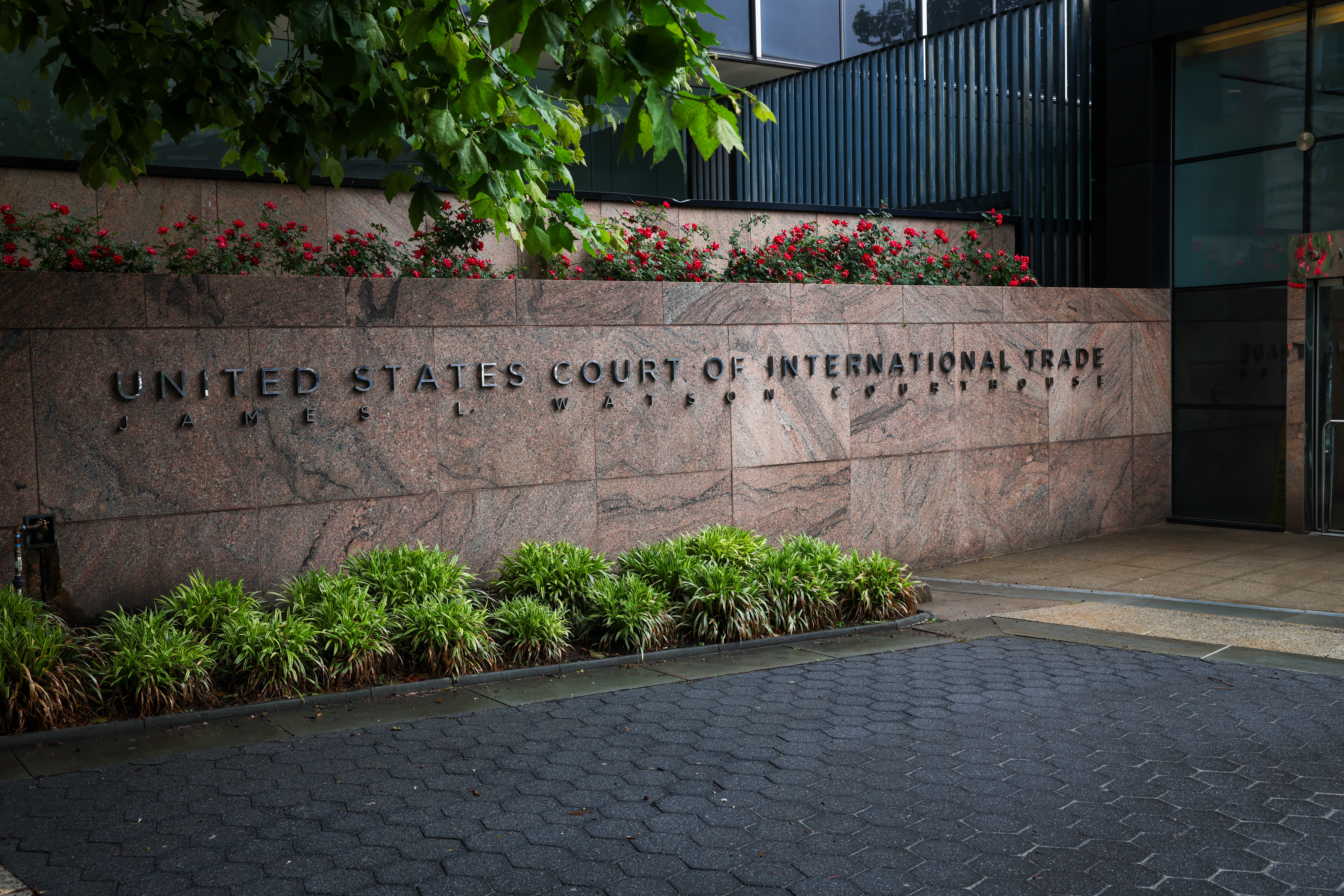
(Photo by Spencer Platt/Getty Images)
State of Affairs: SCOTUS IEEPA Ruling Creates New Uncertainty
On February 20, 2026, the U.S. Supreme Court ruled 6-3 that the International Emergency Economic Powers Act (IEEPA) does not authorize the Trump administration to impose tariffs. It was a significant legal setback for one of the administration’s most flexible trade tools, but not a broader retreat from tariffs. Within hours, President Trump announced a 10% global tariff under Section 122 of the Trade Act of 1974 as a 150-day stopgap. Treasury Secretary Scott Bessent framed the move as a short-term bridge while the administration pursues new Section 232 and 301 actions to restore tariff levels to where they stood before the ruling.
Across Asia, the initial response has been cautious and pragmatic. Rather than treating the ruling as a turning point, governments are reassessing timing, preserving flexibility, and avoiding new commitments. India’s Commerce Minister Piyush Goyal called it “an evolving situation,” adding that India’s interim framework agreement with the U.S. includes a provision ensuring rebalancing should circumstances change. Malaysia’s Prime Minister Anwar Ibrahim said his government would not “make any hasty decisions.” Meanwhile, Thailand convened an urgent meeting to map out strategy for the Section 122 window, warning that “uncertainty is very high” and exporters need clarity.
For Asia’s export-dependent economies, the question is now what replaces IEEPA as the backbone of President Trump’s trade offensive.
Why It Matters: Asia’s Trade Deals Are Now in Limbo
Of all regions, Asian trading partners have arguably been the most proactive and responsive since President Trump announced his sweeping tariffs on “Liberation Day.” This kicked off a race to negotiate trade agreements with Washington, and, in recent months, ten Asian countries reached arrangements to reduce their exposure to IEEPA and other tariffs. These deals have taken different forms, including detailed Agreements on Reciprocal Trade (ARTs) signed by Indonesia, Malaysia, Cambodia, Taiwan, and Bangladesh; broader frameworks built around investment commitments with Japan and Korea; and preliminary frameworks with countries like Vietnam, Thailand, and India that have yet to finalize formal agreements with the U.S.
For trading partners that already reached deals, the immediate priority post-IEEPA is preserving gains rather than renegotiating. Much of that reflects the fact that their most important concessions were secured under Section 232, not IEEPA, and therefore remain intact. Tariff relief for Japan’s $58 billion and Korea’s $52 billion in automotive exports were not impacted, and neither was Taiwan’s Section 232 relief on auto parts and lumber, along with preferential treatment for semiconductor firms investing in U.S. production. As South Korean President Lee Jae Myung put it, “These are promises made between the U.S. president and me, so we will steadily move forward.”
Southeast Asian partners face more uncertainty. Malaysia and Cambodia’s ARTs offered only assurances their deals would be “considered” in future Section 232 actions, leaving them exposed. More than half of U.S.-bound exports from major ASEAN economies are in sectors already under Section 232 tariffs or active investigation. Countries are responding to this in a variety of ways. Cambodia has said it will move ahead with ratification of its trade agreement with the U.S, while Malaysia appears more cautious. Indonesia’s situation is more complicated: its ART included IEEPA-based carve-outs covering nearly 10% of its U.S. exports—concessions now in question.
For countries still negotiating—including India, Vietnam, Thailand and the Philippines—the ruling has created less incentive to move quickly and more reason to wait and see how future U.S. actions unfold. We have already seen India delay a planned delegation to Washington.
China remains Asia’s biggest wildcard. The ruling eliminated both China’s baseline reciprocal tariffs and fentanyl-related IEEPA tariffs, though Section 301 tariffs remain in place. This lowered the U.S. average weighted tariff on Chinese imports from 36.8% to 26.9%. China’s response was measured but pointed, calling on the U.S. to cancel all unilateral tariff measures. With President Trump expected to visit China in April, the administration may be reluctant to take trade actions that could complicate the summit.
What to Watch: New U.S. Tariff Impositions and Non-U.S. Trade Integration
Can deals be finalized and implemented? The most immediate question is whether and on what terms trade arrangements move forward and enter into force. Finalization is only the first hurdle. Countries that signed ARTs have taken on extensive commitments touching on sensitive domestic concerns. Whether governments can deliver on these commitments—and how the administration responds if they fall short—will be critical in the months ahead.
What new tariffs will hit Asia hardest? Section 122 expires July 24, and the administration has indicated it will use that window to put more durable measures in place under Sections 301 and 232. For Asian governments, the question is which sectors are most exposed. Semiconductors stand out as a major concern, but pharmaceuticals, critical minerals, and industrial machinery, and other sectors face active Section 232 investigations. Meanwhile, the Office of the U.S. Trade Representative has signaled that there may be broad-based Section 301 probes targeting issues like agricultural subsidies, digital taxation, and industrial overcapacity. Such an approach could sweep in multiple Asian economies at once.
What will the April Trump-Xi summit deliver? A comprehensive trade deal between the U.S. and China is unlikely, but Asian partners will be watching for signals about where the bilateral relationship is headed whether through tariff adjustments, investment, Chinese purchases of U.S. goods, or export control arrangements. Any terms that bring China’s tariff rates closer to those offered to other Asian partners could undercut the competitive advantages those countries have worked to secure.
Will Asian economies accelerate diversification? The IEEPA saga has reinforced what many Asian policymakers already believed: dependence on the U.S. market carries structural vulnerability. The response is already visible. Since late 2024, 13 trade agreements involving Asian economies have been signed or entered into force, the majority with partners outside the region. Indonesia reached deals with the EU and Canada and, along with the Philippines, moved to join the CPTPP. Malaysia signed an FTA with South Korea and Thailand is targeting new agreements with South Korea, the EU, and Canada this year. CPTPP members have also launched trade and investment dialogues with both the EU and ASEAN. India, too, has been expanding its trade options, concluding FTAs with the UK, Oman, and New Zealand in 2025 and signing a landmark EU trade deal in January of 2026. If Trump’s new tariff regime proves as aggressive as threatened, 2026 could see meaningful acceleration in non-U.S. trade integration.
Dive Deeper with ASPI
Read Wendy Cutler’s op-ed for Nikkei Asia “Trump and Xi Must Deliver More Than Optics at April Trade Summit.”
Check out Jane Mellsop’s analysis for how like-minded countries across Asia can preserve and enhance the rules-based trading system through plurilateral arrangements.
Read Shay Wester’s op-ed for the Straits Times, “Court Rebuke Won’t End Tariffs Threat. Trump Has Fallbacks”, published prior to the IEEPA ruling.