


Editors note: As the U.S. and Israel’s war with Iran enters its fifth week, the conflict has expanded well beyond its initial frontlines. Iran is conducting missile and drone strikes on Jordan and Saudi Arabia—both U.S. allies—and targeting American military facilities across the Gulf, including those in Qatar, Kuwait, the UAE, and Bahrain. Schwarzman Fellow Faye Simanjuntak explains why data centers are the target of some of these strikes and how the Gulf’s booming AI industry might be forced to adapt.
(Getty Images Credit: Richard Newstead)
State of Affairs: Iran’s Infrastructure War
On March 31, the Iranian Revolutionary Guard Corps (IRGC) warned that 18 U.S. companies operating in the Gulf will be considered “legitimate targets” for their suspected support of American intelligence operations, communications technology, and artificial intelligence (AI). The statement specifically listed hyperscalers Microsoft, Google, Apple, Meta, and Oracle, which have recently invested heavily in the Middle East’s AI industry.
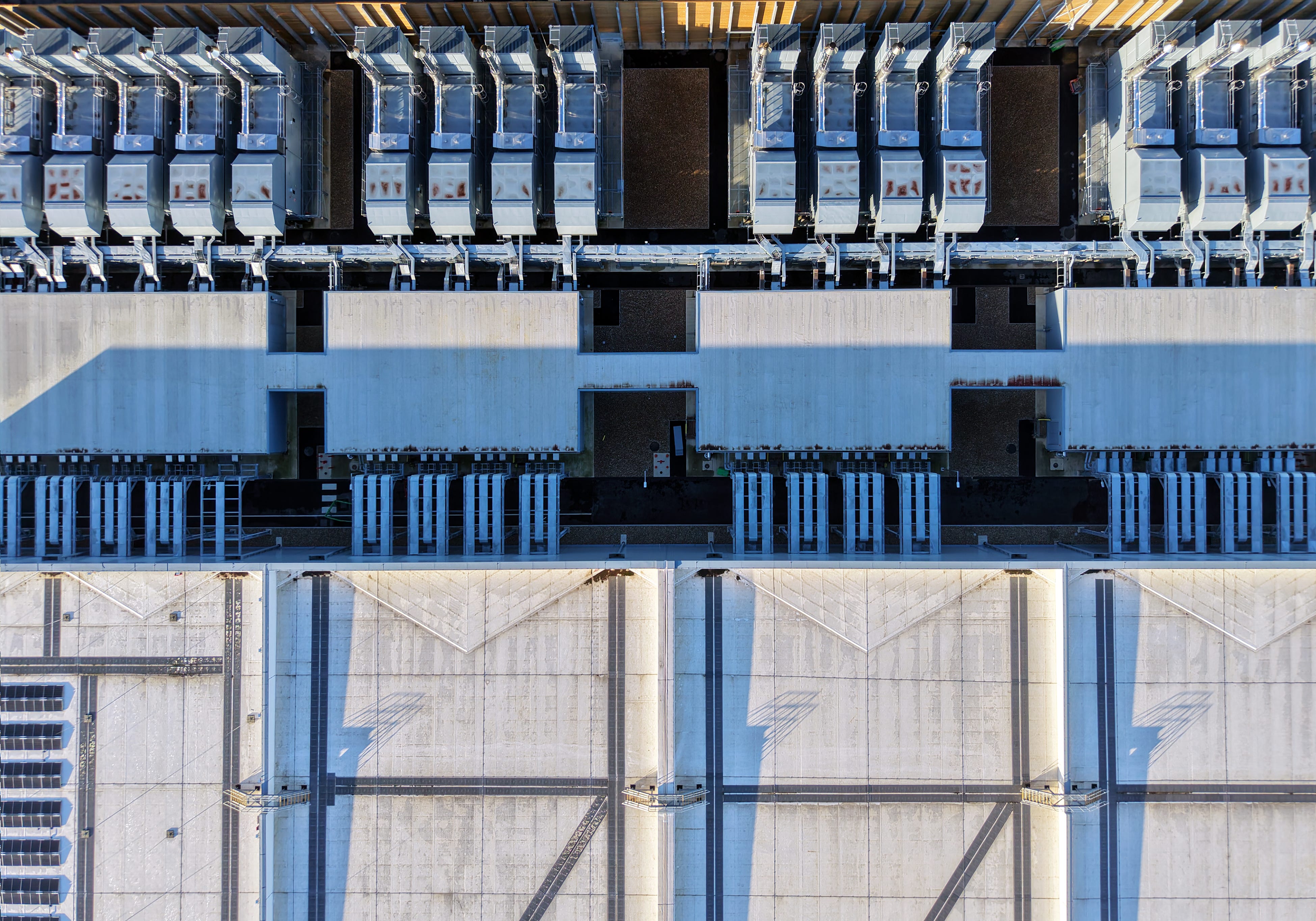
There is ample precedent of targeting civilian infrastructure suspected to play a role in military operations during warfare, but the conflict in Iran has shed light on a new vulnerability: data center infrastructure. Earlier this month, an Amazon Web Services (AWS) data center in the UAE was struck by an Iranian drone. Two more data centers—one in the UAE and one in Bahrain—were damaged the same afternoon. The combined damage on three data centers caused outages in various services across the region, including in banking and enterprise software systems. A week later, a U.S.-Israeli missile strike hit the digital security center of Sepah Bank in Tehran, which was targeted due to alleged ties between the bank and the Iranian military.
Coupled with the IRGC’s threat to American tech companies, these attacks cement a pattern shift in modern warfare, where data centers become both critical infrastructure and military targets, exposing vulnerabilities that the booming data center industry has yet to consider.
Why it Matters: The Gulf’s “New Oil” Under Threat
As hyperscalers expand their footprint across the globe, they are looking to build data centers in stable political environments with reliable energy and friendly regulations. They are also looking for places where they can build data centers close to users, known as low-latency environments, enabling firms to run services that require near-instant communication.
The Gulf checks most of these boxes and has thus become an increasingly popular place for tech firms to invest in infrastructure. Microsoft has committed $15.2 billion in the UAE between 2023 and 2029. AWS has pledged more than $5.3 billion to build a new data center in Saudi Arabia, while Oracle has invested $1.5 billion to boost the country’s cloud capacity. In May 2025, the first international deployment of OpenAI’s $500 billion Stargate project was announced: a major, specialized AI data center in Abu Dhabi that is expected to go live this year. According to OpenAI, the deal was developed in “close coordination” with the U.S. government and President Donald Trump.
Just as oil has defined the region’s economic leverage, data is emerging as a new strategic resource in the Gulf. But Iran’s explicit targeting of data centers has spotlighted the risks and vulnerabilities that accompany concentrating data centers in a given region.
The Data Sovereignty Complication
One of the vulnerabilities that the conflict has exposed relates to data sovereignty. When Iranian missiles struck AWS data centers in March, clients were advised to move their data and applications to other regions and reroute traffic away from the affected sites—a standard disaster recovery playbook. But that playbook collides with laws adopted by the Gulf Cooperation Council (GCC) states to localize sensitive public sector data. These laws require such data to be stored within state borders, limiting where companies can shift operations during a crisis.
For Gulf states, data localization was a strategic play toward sovereignty, but the conflict in the Middle East has made it clear that tying data to a specific location can concentrate risk rather than reduce it. It is now apparent that there is a fundamental mismatch between how hyperscalers manage global resilience and how states assert data sovereignty.
Frontlines of the U.S.-China AI Race
As American companies have flocked to support the Middle East’s AI boom, so have Chinese firms. But Saudi Arabia and the UAE have fully bet on American AI partnerships, cutting ties with Huawei in exchange for approvals to purchase the equivalent of up to 35,000 Nvidia Blackwell chips. Per White House demands, a deal between Microsoft and the UAE’s top AI company, G42, mandated that G42 phase out Huawei hardware and divest from Bytedance. Meanwhile, Saudi Arabia’s Humain pledged not to purchase Huawei equipment. Both companies also agreed to strict security protocols to prevent the diversion of chips to China.
G42, Humain, and their GCC hosts iced out Chinese investment as part of a strategic bet on the value of U.S. technology, but partnering with American companies now seems to be a liability: G42 is the only non-American company named by the IRGC as a potential target for retaliatory strikes. As they watch Iran target data centers and other AI infrastructure, Saudi Arabia, the UAE, and other Gulf states may consider diversifying the countries serving their computing needs.
Move or Adapt?
Existing Gulf infrastructure is unlikely to be abandoned in the near future, but the current conflict in the Middle East may lead the next wave of investments from major tech companies to shift to regions where security concerns are more predictable. Poland and other countries in Central Europe are becoming destinations for operators looking to move beyond the Gulf while capturing some of the Gulf market, as they provide the legal certainty of the EU with the ability to serve users in both Europe and parts of the Middle East. If these regions can fulfill other factors—including water access, power availability, and regulatory flexibility—they will become increasingly attractive destinations for investment.
However, it’s important to note that these are not ideal alternatives to hyperscalers with GCC-based infrastructure. Having in-region infrastructure provides low-latency usage for customers, and Central Europe might not necessarily catch that same market, it will only work as a resilience fallback. For hyperscalers operating in the Gulf, the most urgent task is figuring out the resiliency strategy that will both maintain corporate security and ensure long-term market capture in the region.
What to Watch
Hyperscalers have two potential paths forward. First, these companies might strengthen their presence in the region to offer additional regional coverage as fallbacks in the case of geopolitical instability. This would require specific disaster recovery capabilities and perhaps deepen regional risk. Or, hyperscalers might shift investments into other, less unpredictable regions. It’s likely that these companies will fall somewhere in between to hedge their bets.
Tech companies aren’t the only American firms targeted by the IRGC. Tesla, Boeing, JP Morgan, and several other American companies were named by the IRGC as potential retaliatory targets should more of Iran’s senior commanders be killed. In a statement, the IRGC advised employees to evacuate and to expect the destruction of infrastructure starting at 8pm local time on April 1st. Whether Iran follows through on these threats, and how these companies respond, will be critical to watch in the coming days.
Beyond data centers, energy infrastructure has emerged as a deliberate target on both sides of the conflict. Iranian missiles struck the Ras Laffan liquefied natural gas facility in Qatar on March 18 and 19, while Israel retaliated by hitting Iran’s South Pars gas field the following day. President Trump has since threatened to destroy crucial energy infrastructure in Iran if the Strait of Hormuz is not reopened. As the conflict progresses, it’s likely that other forms of infrastructure may be drawn into Iran’s targeting strategy, undersea cables among them.
Dive Deeper with ASPI
Read Farwa Aamer’s paper “AI Ambitions in a Thirsty Region: Water, Data Centers, and South Asia’s Digital Future.”
Listen to Wendy Cutler, Danny Russel, and Rorry Daniels discuss how Xi Jinping is thinking about the conflict in the Middle East as he prepares to meet President Trump in Beijing.
Watch Asia Society Trustees Vali Nasr and Hamid Biglari unpack the implications of the conflict between the U.S., Israel, and Iran for the future of nuclear diplomacy, the use of AI in warfare, and the stability of the Middle East.