


Editor’s Note: Last week, Trump hosted Xi for a state visit in Washington, the second summit between the two leaders this year. While Trump described the visit as “very productive,” some have noted “little sign of progress.” In this special, double edition of Asia Policy Brief, Danny Russel, ASPI Distinguished Fellow, and Wendy Cutler, ASPI Senior Vice President, provide their assessments of the key diplomatic and economic takeaways emanating from last week’s summit, including today’s announcement of the agreement between the United States and China to lower tariffs on $60 billion worth of goods.
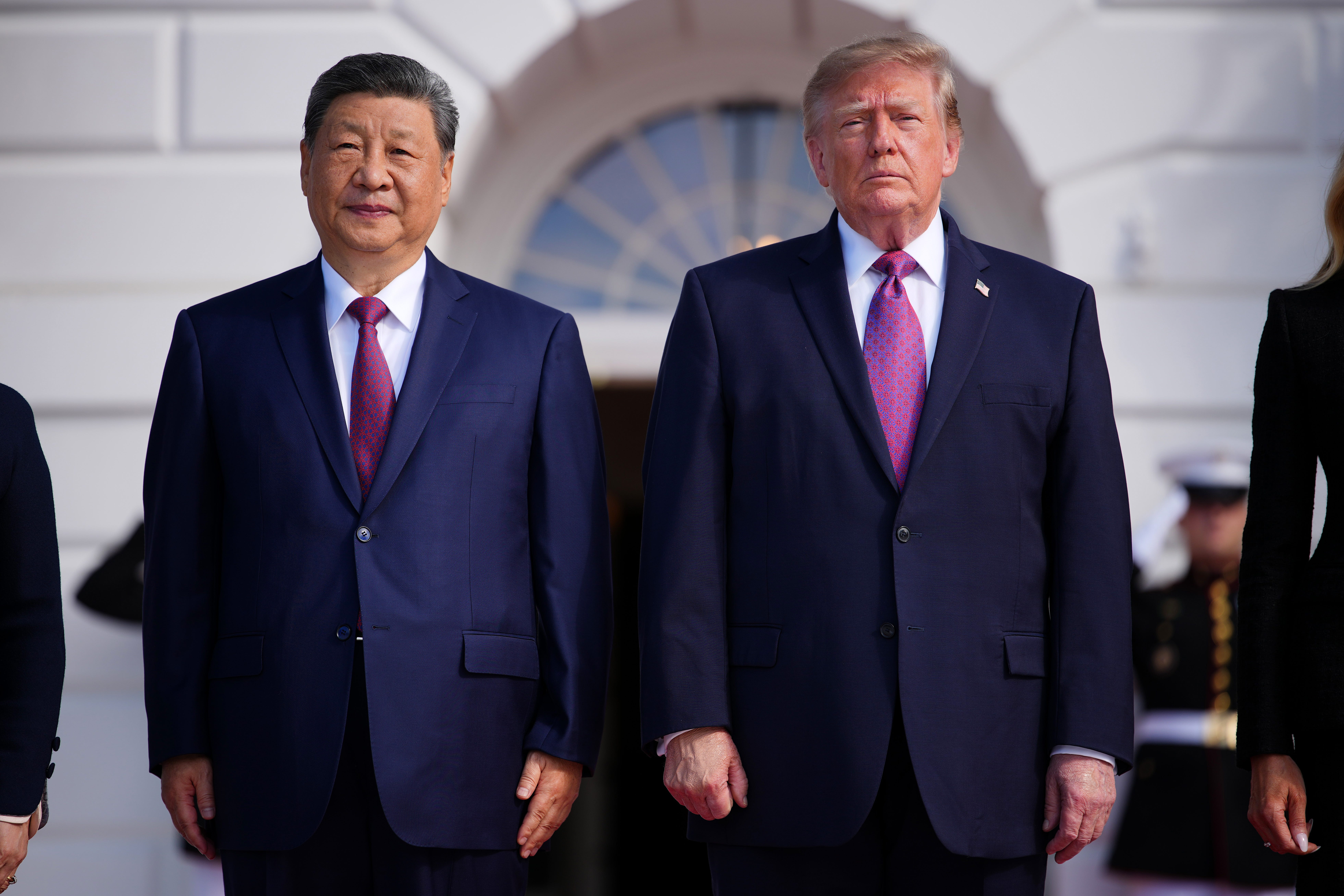
(Photo by Andrew Harnik/Getty Images)
Pomp, Promises, and Strategic Stalemate – Danny Russel
State of Affairs: “Diplotainment” Comes to Washington
President Trump claims the summit with Xi Jinping made “tremendous strides.” For the United States, however, it produced a grand total of two loaner pandas, the two-month extension of a trade truce, and a handful of uncertain promises. Pandas are cute, and a trade war ceasefire is worth keeping, but what America really needs is rare-earth magnets. The U.S. may not have gained much from the meeting, but the White House enjoyed a few days of headlines diverted from the Iran war or the economy.
This theatrical diplomacy can be best described as “diplotainment.” There was time to admire helipads and archives but only about 90 minutes to work on the issues of immense consequence to the world. The two nations remain in a stalemate—each holding the other in a chokehold of technology controls versus critical minerals. Despite Trump’s effusive praise and Xi’s lukewarm acknowledgement of some “rapport,” the two countries are still locked in a bitter competition over trade, tech, Taiwan, defense, supply chains, and geopolitical influence.
China’s Foreign Ministry—although not its Defense Ministry so far—cited an agreement to strengthen military crisis communications, something of real value if it were actually to operate. But the recent record of cancelled crisis meetings, and hotline calls ignored by the Chinese military—including Defense Secretary Austin’s call after the 2023 balloon shoot-down—gives grounds for skepticism.
Why It Matters: Pomp Does Not Create Leverage with Beijing
Overall, Beijing evinces a new confidence that it now “holds the cards,” particularly after successfully gambling on a sharp pushback to Trump’s “Liberation Day” tariffs. President Trump’s climb-down in the face of China’s retaliatory rare-earths squeeze showed Beijing that it held a stronger hand than it realized. America’s self-inflicted wounds—the Iran war, economic strain, alienated allies, and domestic polarization—strengthen China’s sense that time is on its side. The effusive pageantry of the visit reinforced their perception of a shift of the power differential in China’s favor. That dynamic is captured in the image of President Xi’s arrival, looking down on the U.S. president waiting at the bottom of the aircraft’s stairs after cooling his heels at the airport for a full hour. However gracious, the lavish ceremonial protocol throughout the visit perfectly served Chinese propaganda.
The recent record shows that flattery and pomp simply do not create leverage with Beijing. President Xi is clearly not acceding to American requests in a spirit of friendship and reciprocity—whether on Iran or imprisoned Hong Kong publisher Jimmy Lai or detained Americans. U.S. Ambassador to China David Perdue told the press that the president had forcefully warned Xi that any support to Iran would be “unacceptable.” The Chinese official media readout did not mention Iran at all. The White House Fact Sheet cited merely an agreement in principle that Iran shouldn’t acquire nuclear weapons or impose tolls on international waterways. In any event, it seems highly improbable that China will change course and line up with Washington’s “Economic Outcast” operation.
Taiwan is unmistakably the issue Xi cares most about, and following the Chinese leader’s push during their May meeting in Beijing, Trump clearly echoed important elements of Beijing’s position. Xi’s message in his Washington visit called on Trump to stick to the “correct position.” This feels like a warning against backsliding from the position that Beijing deems to be “correct.” Thus far in 2026, Beijing has been successful in getting President Trump to put a hold on the $14 billion package of additional weapons to Taiwan. Trump has explicitly called it a “negotiating chip,” rather than a defense commitment. Beijing has used that chip by implicitly linking the continued suspension to maintaining the “constructive strategic stability” framework, which includes suspension of the ban on rare-earths exports. We will see if President Trump releases the arms package now that the Xi visit is over. If not, experience has shown that when China’s coercive tactics meet with success, Beijing only pushes harder.
Artificial intelligence is the topic which everybody is talking about—except for, for the time being, the United States and China. The two governments announced an AI dialogue in May with great fanfare, but Treasury Secretary Scott Bessent now says the first real meeting may not happen until around November—six months from the announcement. Six months in AI development is a lifetime—maybe even literally, if the warnings of some experts are to be believed. Yet, while AI development is moving at warp speed, U.S.-China AI diplomacy is moving at bureaucratic crawl. Construction of the White House ballroom is moving faster. Moreover, the agenda for the AI talks seems modest, with little more than a mechanism for notifying each other of incidents.
There is, of course, something to be said for Chinese and American leaders speaking and doing so politely. In a relationship of this consequence, keeping the temperature below the boiling point is definitely worthwhile. But in order to do more than to camouflage a dangerous strategic rivalry, the summit scorecard needs to reflect real outcomes, not merely promises, processes, and postponements to the next meeting. On the available evidence of this visit, Xi flew home in a better position than when he left, with perhaps a firmer conviction that the Trump presidency offers a valuable window of opportunity. Nothing in this visit likely challenged Xi’s belief that time and the tide of events are on China’s side.
What to Watch
Taiwan: Does Trump release the stalled $14 billion arms package before APEC?
Rare Earths: Does Beijing issue general licenses and let rare-earth magnets flow to U.S. companies?
Iran: Is there actual evidence that Beijing is using economic leverage to push Teheran to restore unrestricted passage through the Strait of Hormuz?
North Korea: Does Xi broker a visit by Kim Jong Un while Trump is in China for APEC?
Modest Economic Deliverables – Wendy Cutler
State of Affairs: A Brief Reprieve on Trade Before APEC and G20
Concrete economic outcomes emanating from President Trump’s meeting with Xi Jinping were minimal. In many ways, this was not surprising. There was far less preparation and engagement between officials leading up to the meeting than in previous U.S. administrations. Moreover, knowing that they are to meet on two more occasions this year probably eased some of the pressure to deliver for this meeting. But importantly, the United States and China are now at a juncture where management of the relationship has become the focus, rather than taking it in a new and ambitious direction. Efforts to do so during Trump’s first administration resulted in disappointment, with the Phase One trade agreement failing to rebalance our relationship and open the Chinese market to U.S. exports and investment in a meaningful and lasting way.
After a brief tariff tit-for-tat escalation last year, Washington and Beijing reached a trade truce in October 2025, which was set to expire on November 10 this year. One concrete deliverable announced was a two-month extension, taking the détente to January 10. This date conveniently gets both sides beyond the APEC and G20 meetings this year, when the leaders are to meet again. In the U.S. view, China is slow walking its full implementation of the terms of the truce, particularly with respect to maintaining steady export levels of critical minerals and magnets, as well as purchasing the amounts of U.S. agriculture, including soybeans and airplanes, that were announced at previous meetings. As result, U.S. negotiators prefer short extensions as a means to keep pressure on Beijing to comply. Conversely, Beijing was seeking to extend the truce until the end of the Trump administration in an effort to limit Washington’s policy space on further trade actions, particularly export controls. U.S. negotiators succeeded in securing a short extension, but the jury is out on whether Washington can use this time effectively to get China to step up.
Beyond the two-month trade truce extension, USTR Greer announced on Monday that both sides have agreed to a $60 billion list of non-sensitive products slated for tariff reduction in the future. While the product lists were detailed and presented in dozens of pages of harmonized system product codes, the next steps remain vague, citing the need for both sides to undertake domestic procedures. It’s unclear whether the US will put this list out for public comment, but given the detailed bilateral negotiations that spanned multiple months to produce this list, it’s unlikely that adjustments will be made.
A working group on agriculture under the Board of Trade was also announced, an important ask by the U.S. side. While a welcome development, this outcome at this juncture is more process than substance. The two sides also defined the objective of the Board of Trade to “optimize” trade, a bit different than the managed trade approach advocated by Greer. Overall, the working procedures and mandate remain modest. This reflects the realities of our trading relationship with China, where the bulk of trade increasingly falls into the sensitive basket, prompting both countries to reduce their reliance on each other rather than seek ways to enhance trade.
Washington also announced new Chinese commitments to buy more U.S. coal, but both sides were largely silent on where Chinese efforts stand to purchase more U.S. agricultural products, including soybeans, and aircraft in line with previous announcements. Keeping China’s feet to the fire on these commitments is critical if these pledges are to be taken seriously.
When it comes to the Board of Investment, things get even murkier. The U.S. Fact Sheet mentions its vague mandate to discuss opportunities and impediments in the investment space, but unlike the Board of Trade lacks details on its meeting schedule, leadership of the group, and practical and immediate areas of focus.
And the elephant in the room—the issue that led to the trade truce—U.S. access to critical minerals and magnets is still a formidable problem. China continues to restrict exports to the United States in this sector, which have been estimated to have dipped to about two-thirds of the levels of earlier shipments. The United States continues to press China to release more, but Washington has not succeeded in getting Beijing to pony up.
Why It Matters: More Process than Substance
Particularly compared to summits under other presidents, the trade and investment deliverables announced thus far are incremental at best, represent limited and low ambitions, and feature lots of process. That said, we can’t underestimate the importance of trying to keep bilateral economic relations stable, looking for small ways to trade and invest more, avoiding escalation of tensions, and keeping Chinese critical minerals and magnets flowing. Both sides are using this truce period not so much to forge closer ties, but rather to reduce their dependence on each other, particularly in strategic sectors. But even with these limited objectives, last week’s summit could and should have produced more.
What to Watch
In light of the vague nature of many of the announcements this week, it will be worth watching whether more details are forthcoming on what was agreed to thus far, and whether additional economic deliverables will be rolled out in the coming days and weeks, particularly in the lead up to the APEC and G20 meetings later this year. Of particular interest, will be (1) when the tariff cuts on the list of the non-sensitive products agreed upon actually take place; and (2) whether China fulfills its commitments on keeping high levels of critical minerals and magnets flowing, and on purchasing the aircraft, coal, and agricultural products at the volumes agreed upon. Finally, with the trade truce expiring on January 10, discussions on another rollover will need to be held, and the length of its extension will likely reflect progress made on China living up to what has been agreed upon.
Dive Deeper with ASPI:
Join Asia Society online for a webinar on “Substance or Signal? Reading the Trump-Xi Summit” featuring Kevin Rudd, Wendy Cutler, Amy Celico, and Paul Triolo in conversation with Neil Thomas.
Watch Kevin Rudd on CNN’s Amanpour and Barron’s discussing the Trump-Xi Summit.
Danny Russel comments on Trump-Xi Summit in The Straits Times.
Read Wendy Cutler‘s op-ed for fDi intelligence on AI’s biggest risks.
I forget who it was but someone had a great title for a post, "He said, Xi said"